All You Need is Love and Cat SVG Cut
A Designer’s First Look: Charm with Quiet Confidence
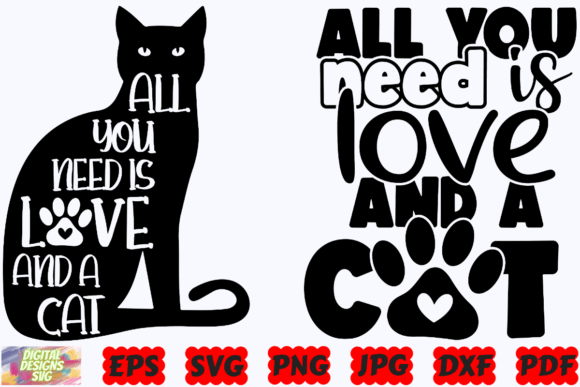
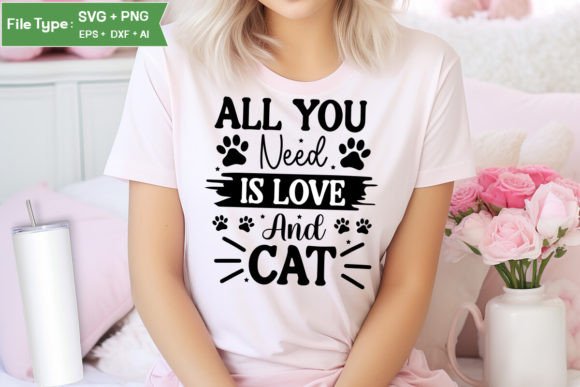
When I opened All You Need is Love and Cat SVG Cut, what struck me wasn’t flashiness—it was warmth. The composition balances a soft, rounded cat silhouette with clean, slightly handwritten lettering that reads “All You Need is Love.” It’s not overly cutesy, nor is it minimalist to the point of sterility. It lands somewhere honest and approachable—like something you’d stitch onto a kitchen towel for a friend’s baby shower or embroider on a linen apron for your own small shop. As a designer who evaluates hundreds of embroidery files each year, I appreciate how this one avoids visual clutter while still carrying personality. That matters—especially when translating from screen to stitch.
Where This Design Finds Its Real-Life Rhythm
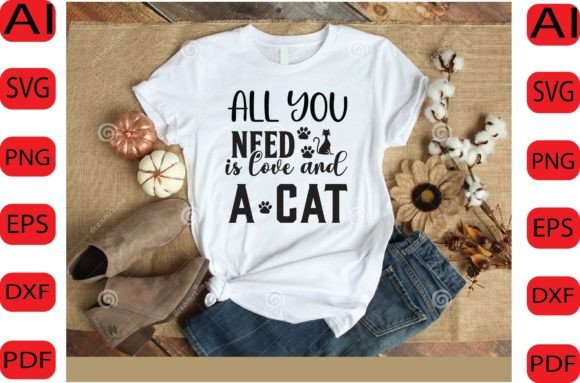
Last week, I used All You Need is Love and Cat SVG Cut as the centerpiece for a custom embroidered tote bag—linen-cotton blend, medium-weight, destined for a local bookstore’s staff gift set. I chose a muted sage thread on natural fabric, and the result held up beautifully: the cat’s outline stayed crisp, the lettering remained legible at 3.5 inches wide, and the overall impression was handmade but polished. That’s the sweet spot. It works just as well on a lightweight cotton baby onesie (with light tear-away stabilizer), a brushed cotton sweatshirt (paired with cutaway backing), or even a tea towel where subtlety reads as intention—not afterthought.
This isn’t a design that screams for attention. It whispers—and that makes it ideal for boutique branding, personalized gifts, or Etsy listings where customers seek authenticity over loud graphics. Think: nursery decor stitched on a muslin wall hanging, holiday gift tags for pet lovers, or a small embroidered patch sewn onto a denim jacket. It fits naturally into quiet moments—first birthdays, anniversaries, “just because” notes tucked into handmade soap bundles.
Where Caution Meets Craftsmanship
Like any embroidery file, All You Need is Love and Cat SVG Cut doesn’t perform equally across all surfaces. On stretchy knits—think t-shirts or ribbed baby caps—I’d recommend testing first with a tight-hooped stabilizer combo (cutaway + topping) to prevent letter distortion. The curves in the cat’s ears and the subtle flourishes in the “love” script are delicate enough that dense stitch density could blur them on textured fabrics like terry cloth or heavy fleece. And while the design scales well down to ~2.75 inches, going smaller risks losing definition in the inner eye detail or thin strokes of the lettering—so avoid sub-2-inch applications unless you’re confident in your machine’s precision and thread tension.
Dark fabrics demand extra attention too. The design relies on shape and contrast rather than heavy fill, so stitching it in white on black requires a solid stabilizer base and possibly a second pass on satin-stitched areas to ensure coverage. Likewise, curved surfaces—like the front panel of a structured cap—may need manual repositioning or digitizing tweaks if you're converting this SVG into a true machine embroidery file (remember: this is an SVG cut file, not a native .dst or .pes). Always test on scrap before committing to the final piece.
What It Adds to Your Finished Product—Beyond Aesthetics
Using All You Need is Love and Cat SVG Cut elevates perceived value without adding complexity. Customers notice craftsmanship in clarity—not quantity. When the cat’s outline stays smooth and the lettering breathes evenly, it signals care. That builds trust, especially for Etsy sellers or craft fair vendors whose reputation rides on consistency. For small shop owners, it supports brand cohesion: imagine using the same motif across embroidered pillow covers, digital printable mockups for social media, and even simple packaging stickers—all rooted in one cohesive graphic.
It also invites personalization without demanding it. You don’t need to add names or dates to make it meaningful. Its strength lies in emotional resonance—gentle, inclusive, quietly joyful. That kind of design tends to photograph well, convert better in listings, and hold up across seasons. No trend-chasing required.
Practical Notes Every Embroidery Designer Should Keep Handy
- Test first—always run a sample on your target fabric with intended stabilizer and thread colors.
- Review stitch density if converting to embroidery format; avoid overloading fine details with fill stitch.
- Confirm hoop size compatibility—this design fits comfortably in a 4x4 hoop at standard scale, but double-check before digitizing.
- Inspect small corners—the tail curl and lowercase “e” loops benefit from sharp needle points and steady tension.
- Try black-and-white mockups to assess contrast on both light and dark backgrounds.
- Use proper stabilizer—lightweight cutaway for stable wovens, medium-weight for knits, topping for napped fabrics.
- Verify licensing—since this is a digital embroidery file sold for Crafts and Graphics use, confirm whether commercial resale of finished embroidered items is permitted.
Final Thought: Not Just a File—A Thoughtful Starting Point
All You Need is Love and Cat SVG Cut won’t replace your go-to monogram or bold logo—but it fills a different, essential role. It’s the kind of design that reminds us why people buy handmade: for feeling, not function alone. Whether you’re building a craft business, stitching gifts for loved ones, or curating a line of small shop products, this file earns its place by being easy to use, hard to misfire, and quietly memorable. In a landscape full of noise, that kind of restraint is rare—and valuable.